
The Monsters I Feared Weren't Monsters at All
The damage of queer-coded menace.
I grew up afraid of monsters, not the kind Frankenstein stitched together from corpses. The monsters I’m referring to appeared in Strangers on a Train, Psycho, and Blue Velvet. Unlike Frankenstein’s monster, who had an excuse for being terrifying, the ones in these films didn’t. They were simply cruel, or strange, or looking at other men a beat too long, and somehow that was worse.
As a porous young gay boy, I understood the lesson before I had the language for it: Being what I was carried a threat no monster movie could invent. I wasn’t afraid I’d meet these men. I was afraid I’d become them. That fear returned as I watched The Shards, Ryan Murphy’s latest miniseries based on Bret Easton Ellis’s novel.
Why do we still code menace as queer?
That’s the question I kept waiting for the show to reckon with. The visual grammar of the old tropes remains. There’s Bret, the closeted bisexual high school protagonist. There’s the predatory, closeted movie executive who ensnares him in a sexual bargain, despite dating the man’s daughter. And there’s Steven, played by the gender-fluid Jordan Roth, wearing a two-toned Flock of Seagulls wig and Michael Jackson’s red leather Thriller suit. Steven feels like the descendant of Stockwell’s Ben in Blue Velvet, the queer-coded outsider whose difference has historically been used as shorthand for menace: theatrical, inscrutable, and sublimely dangerous.
This isn’t a new phenomenon
Once the Hays Code barred “sexual perversion” from the screen in 1930, filmmakers didn’t stop telling queer stories. Instead, they learned to tell them sideways. As the documentary The Celluloid Closet traced, under the Hays Code and for decades afterward, queerness on screen couldn’t be named directly, so it was displaced into villainy, camp, and often a tragic death.
Film historians point to characters like Marya Zaleska in Dracula’s Daughter and Sebastian Venable in Suddenly, Last Summer as the template: figures whose demise was somehow necessary for everyone else’s safety. The most infamous descendant may be Buffalo Bill in The Silence of the Lambs. GLAAD called him a walking stereotype, and the backlash was organized and loud. The film’s director, Jonathan Demme, later called the coding a “directorial failing.” Murphy and Ellis presumably know this history. That’s what makes The Shards frustrating rather than careless.
The test for The Shards isn’t whether it includes unsettling characters who read as queer. It’s whether it punishes them for it, as Mrs. Danvers perished in Rebecca or Norman Bates is apprehended in a dress, reassuring us that the real threat was never gender-nonconforming at all. On that test, The Shards is more equivocal than its aesthetics suggest. Bret, whose interiority we’re most asked to inhabit, is closeted and desiring, but the moral center, not its monster. That’s a real departure from the trope’s core function, and it’s worth crediting. Steven inherits the full weight of Stockwell’s Ben and of Harold from The Boys in the Band: cruel, vulnerable, always stylish. The trope has been split in two. Its humanizing half goes to its lead, Bret, and the punitive half to everyone else who is queer-coded around him.
This isn’t simply an aesthetic quibble
While no single film or television series creates internalized stigma on its own, decades of cultural messaging that associate queerness with danger, shame, or deviance contribute to the social environment in which internalized stigma emerges. A 2023 meta-analysis of 22 studies found that internalized stigma is consistently linked to depression and suicide risk among queer youth in the United States. Children don’t experience these characters as critiques of queerness. They experience them, as I did, as forecasts.
That’s not the anti-trope this former scared gay kid was hoping for. A show that, at long last, noticed the patterns that taught me to fear myself and used that recognition to rewrite them. Instead, The Shards acknowledges the trope’s existence, exempts its protagonist from it, and largely deploys it unexamined on everyone else. The half-measure may be the most revealing indictment of all: not that Murphy and Ellis don’t know better, but that knowing better and doing better aren’t the same thing.

Why It's So Hard to Change
Henrik Ibsen's character Nora was courageous.
In Henrik Ibsen’s play A Doll’s House, Nora wakes to the realization that she’s been living a false identity and chooses to leave it in the end, even at the enormous cost of leaving her children behind; a decision that remains shocking today. Contemporary criticism has reframed Nora’s exit as self-realization rather than abandonment. Her transformation is tied to autonomy and self-awareness. While extreme, her evolution is courageous and illustrates something universal: change, even when it’s necessary or good for us, rarely feels that way in the moment.
Our brains perceive uncertainty as a threat, which activates our fight-or-flight response. It’s as if our brains react to change, even when it's positive, as a trauma response, which may help explain why people who’ve lived through trauma sometimes find even positive change hard to tolerate. Maintaining the status quo feels safe, even when change could lead to recovery. We anchor ourselves to the status quo as a baseline for what feels normal. Once something becomes the default, it starts to feel like the correct state, and any deviation feels like it needs justification, even if the status quo itself was arbitrary.
What does the science say?
According to the transtheoretical model, change is a process with five stages:
Precontemplation. An unconscious awareness that change is necessary. To move past this stage, we need to recognize that change is necessary.
Contemplation. The stage where we make a plan for change by employing research as a necessary step to inform us about how to go about making changes
Preparation. The stage where we start planning to change.
Action. Executing our plan. To be successful, we develop strategies to stay on track.
Maintenance. This stage typically occurs around the six-month mark, when the action we took begins to feel stable, less threatening, and more consistent.
While transtheoretical is a model, it’s often viewed as a spiral. Though the steps seem straightforward, we often regress to a previous stage. Not such a bad thing, since each time we start over, we get smarter and stronger.
Still, that doesn’t make change any easier. Behavioral economics calls this loss aversion. We feel the pain of losing something roughly twice as intensely as we feel the pleasure of an equivalent gain. Even a clearly “better” change registers emotionally as: What am I giving up?
Our identity gets tangled up in habits. The way we already do things becomes part of how we see ourselves. Changing behavior can feel like changing who we are, which is a much bigger ask than it looks on the surface.
Change also costs energy the brain would rather not spend. Established patterns run on autopilot. New ones require conscious effort. The effort feels like friction, which gives us reason to stop, stall, or freeze. This is especially pronounced when past change has gone badly. No one wants to make the same mistake twice. When earlier attempts to change something led to failure, humiliation, or harm, that history gets encoded, making the next attempt feel even riskier.
Not so irrational, right? The problem isn’t that we resist change, but that we resist it reflexively, without weighing whether this particular change is worth the discomfort or effort to override the fight-or-flight response.
Let’s revisit Nora.
Early in the play, Nora appears as a woman shaped by years of trauma in a patriarchal environment. She is bubbly, childlike, and fawning. She lives only to appease her controlling husband. She masks her deep intelligence, financial stress, and the crime she committed to protect him behind the frivolous facade of a macaroon-eating shopaholic. She anticipates catastrophe and bases her sense of safety solely on her husband’s volatile approval. Yet in the end, she leaves behind the “dollhouse” and all its domestic trappings, including her children, choosing instead to live a life more in line with who she wants to be rather than the person she has become. That’s what makes her personality shift so abrupt and courageous.
Not everyone who has suffered trauma is poised to make life-altering decisions as Nora did. But her story offers something useful even in far smaller moments:
A habit we can’t seem to break.
A conversation we keep avoiding.
A version of ourselves we’ve outgrown but haven’t yet let go of because it might disappoint others.
Change will always feel like danger before it feels like relief. That’s not a character flaw. It’s how we’re built.

Stop Apologizing For Everything
When saying “I’m sorry” becomes self-erasure.
If we learned anything from the COVID-19 pandemic, it was that Zoom calls would, for most people, replace live face-to-face meetings. With it came an implied list of virtual rules the likes of which would make Emily Post blush. Chief among them was beginning every question with a polite recognition that began with the phrase, “Apologies if you covered this already, but I’m curious to know…” It was as if SARS-CoV-2 had brought with it a co-infection of polite etiquette.
But apologizing constantly—especially when you haven’t done anything wrong—isn’t politeness. It’s shame in disguise. When shame tells you that you are the problem, apologizing becomes a preemptive defense. You say “I’m sorry” before anyone can accuse you. It feels like humility, but it's actually self-erasure.
The Link Between Self-Erasure and Chronic People-Pleasing
Much of the research on self-erasure links it to chronic people-pleasing, in which a disproportionate external focus leads to disconnection from your authentic self. This draws on trauma research on the “fawn” response. Initially described by Pete Walker, a psychotherapist specializing in complex PTSD, “fawning” is a response to a threat in which the individual becomes more appealing to the threat—mirroring someone else’s desire to diffuse conflict and find safety by surrendering their own boundaries.
Fawning is considered the fourth F in the fight/flight/freeze response. Fight-or-flight dates back to Walter Cannon’s (1915) work on the sympathetic nervous system. Freeze was introduced later by Dr. Peter Levine. The three Fs were given a home in 1995, when neuroscientist Stephen Porges first published his polyvagal theory. Deb Dana, a clinician who worked with Porges, translated the theory into the Polyvagal Ladder metaphor, a more usable therapeutic construct with three rungs:
Top Rung: ventral vagal (safe and social).
Middle Rung: sympathetic (fight or flight).
Bottom Rung: dorsal vagal (freeze/shutdown).
How Fawning Fits Into the Polyvagal Theory
Where does fawning fit? It doesn’t get its own rung. Generally, it’s described as sitting at the intersection of the freeze/shutdown state, with an extra dollop of appeasement laid on top, since it involves both the immobilization of the dorsal vagal shutdown and a strategic, socially oriented move to placate the threat.
What does this look like in real life? You apologize for having an opinion, for taking up space, for existing in a way that might inconvenience someone else. Here's the distinction worth making: apologizing for something you did wrong is healthy shame doing its job. Apologizing for who you are—that's toxic shame playing the part of the officious server, hovering before a table of diners who haven’t opened their menus yet, poised to apologize for making them wait.
Overcoming Reflexive Apologies
Tying it all together: the shame-driven, boundary-blurring apology you offer up reflexively is literally what fawning looks like physiologically. A nervous system that dropped toward shutdown but is using an appeasing behavior to climb back up toward safety rather than genuine repair of something that went wrong.
Here’s your practice. Next time you feel the urge to apologize, pause. Ask yourself: Did I actually do something wrong, or am I apologizing for taking up space?
Because you were never meant to stand on the sidelines when you earned a seat at the table.
Why High Achievers Are Often the Most Ashamed People
The problem isn’t achievement—it’s the perfectionism beneath the surface.
The most accomplished person in the room sometimes carries the most shame. Their achievement is the evidence—not of their confidence, but of how hard they’ve been swimming. Achievement itself isn’t the problem; it’s the perfectionistic relationship to achievement that correlates with shame.
Here’s how it works: When the core belief is that I’m not enough, achievement becomes the only proof of worth. If I do more, get more, become more—maybe the feeling will stop. But it never does, because no amount of external success quiets an internal belief.
It’s like swimming toward the horizon. You finish one stretch, and it’s still exactly as far away. The goalpost moves—because it was never real. It was never really about the horizon. It was about managing the feeling below the surface. And that kind of persistent striving toward perfection comes with a cost: chronic exhaustion, an inability to enjoy any success, and strained relationships because you’re always feeling the need to be “on,” or sabotaging connections when the other person gets too close.
Achievement doesn’t necessarily correlate with self-worth. Building one isn’t directly proportional to the growth of the other. And seeking perfection may undermine self-worth while driving achievement, creating a spiral that only perpetuates shame.
Here’s what the science shows. Gordon Flett and Paul Hewitt’s (1991) research on perfectionism found that “self-oriented perfectionism” was generally associated with greater productivity, career success, and conscientiousness when being perfect mattered to you, regardless of what others thought. However, “socially prescribed perfectionism” is defined by the belief that others hold you to impossibly high standards and that their approval is conditional on being perfect. This dimension carries the highest risk profile, with greater rates of anxiety, depression, and even suicide when the person can’t put others’ perceived criticism into perspective. Later research clarified that self-oriented perfectionists are not entirely benign. These individuals still place irrational importance on perfection and hold unrealistic expectations of themselves. (Curran & Hill, 2019).
Healthcare providers are often considered high achievers. A review in the Postgraduate Medical Journal (Oxford Academic, 2022) reports that perfectionism is a common indicator of success among high achievers and of conscientiousness, which predicts job performance but is also a well-established driver of psychological distress. High maladaptive perfectionism is linked to cognitive distortions that fuel anxiety, depression, imposter syndrome, and burnout.
As for me, I was oblivious to my need to overachieve, and I had struggled with shame for decades stemming from childhood trauma. Its undertow was always there. Then the COVID-19 pandemic brought a global lockdown, and in that isolation, shame's pull felt newly powerful and dangerous in ways I hadn’t experienced before.
Examples of how unresolved shame shows up in achievement/perfection include a compulsion to people-please, an inability to accept praise after a win, treating criticism as proof of your fundamental inadequacy, and setting increasingly ambitious goals once one is met.
You can be extraordinarily accomplished—and still feel like you’re treading water. That distance to the horizon? Shame lives there, below the surface.
Here’s the question worth sitting with: If you stopped swimming today, would all you’ve achieved still be here tomorrow? Consider sitting with this question for 60 seconds this week. Notice what comes up and name it. Don’t judge. Just sit with it.
Whatever comes up is the work.

Navigating Wedding Season Sober

1. Futurize your success. Spend five to ten minutes before the big day imagining what a great night actually looks like — the friends and family you’ll reconnect with, the laughs you’ll actually remember, and waking up the next morning with zero regrets, a clear head, and every moment intact. That mental picture is a powerful anchor when the evening gets challenging.
2. Keep your hands busy. Those first few awkward minutes after you arrive are often the hardest — make sure you have a drink in hand early. A sparkling water, a mocktail, anything. It keeps your hands occupied, removes the hesitation moment, and gets ahead of the well-meaning offers before they start.
3. Don’t hang out at the bar. The bar is where the pressure lives. Get your non-alcoholic drink and move on — position yourself where the conversation is, not where the drinking is.
4. If things get triggering, extract yourself. Step outside, make a phone call, excuse yourself to the restroom — whatever it takes to create a moment of space. Once you’re there, return to your futurizing exercise. Recall your why. And if you can, find a mirror, look at your reflection, and say it out loud: “This is hard. You’re doing great. I’m so proud of you.” It sounds simple. It works.
5. Confide in one person. You don’t need to announce anything to the room — just find one person at the event who knows you’re not drinking. This isn’t about finding someone to watch over you. It’s about accountability, not a babysitter. Knowing that one person is aware keeps you anchored to your own commitment in a way that’s empowering, not dependent.
Let the joy be the point. Sobriety at a celebration isn’t deprivation — it’s the clearest possible way to actually be there for it. It’s not FOMO. It’s JOMO — the Joy Of Missing Out on everything you’d rather forget anyway. That’s something I felt very genuinely at my own family’s wedding, and I’m glad you asked about it. Please feel free to share that story. If it helps even one person feel less alone going into a wedding this summer, that’s exactly the right use of it.
SEASONAL AFFECTIVE DISORDER AND ALCOHOL
Seasonal Affective Disorder (SAD) is a form of recurrent depression that typically emerges in the fall and winter months as daylight decreases. Common symptoms include low mood, fatigue, hypersomnia (excessive sleeping), social withdrawal, carbohydrate cravings, and reduced motivation. These same months are also associated with increased alcohol use—creating a dangerous feedback loop that can worsen both mood and functioning.
HOW ALCOHOL INTERACTS WITH SAD
Alcohol is a central nervous system depressant and can significantly exacerbate the core features of SAD:
• Mood dysregulation: Alcohol temporarily increases dopamine but ultimately lowers baseline mood and worsens depressive symptoms (World Health Organization, 2022).
• Sleep disruption: While alcohol may help with sleep onset, it fragments sleep architecture, worsening fatigue and low energy—already hallmark symptoms of SAD (Roehrs & Roth, 2001).
• Circadian rhythm interference: SAD is closely tied to circadian misalignment; alcohol further disrupts melatonin regulation and sleep–wake cycles (Hasler et al., 2010).
• Reduced treatment response: Alcohol use can blunt the effectiveness of first-line SAD treatments such as light therapy, psychotherapy, and antidepressants (Lam et al., 2016).

Reducing or eliminating alcohol during the winter months can be a powerful, low-risk intervention for people experiencing seasonal mood changes:
• Improved energy and sleep quality
• More stable mood and emotional regulation
• Better engagement with evidence-based treatments (light therapy, CBT-SAD, exercise)
• Increased self-efficacy and insight into emotional triggers and coping needs
Importantly, cutting back does not have to mean lifelong abstinence. For many, seasonal sobriety or intentional reduction is a pragmatic mental health strategy—similar to adjusting sleep, diet, or exercise during winter months.
WHY CUTTING BACK—OR CHOOSING SOBRIETY—CAN HELP
A COMPASSIONATE FRAME
SAD is not a personal failure, and neither is struggling with alcohol during darker months. Alcohol is often used as an understandable attempt to self-soothe symptoms like loneliness, anhedonia (inability to feel pleasure), or exhaustion. A compassionate, non-moralizing approach—focused on curiosity rather than control—leads to better outcomes and more sustainable change.

Level Best Books is proud to announce the acquisition of The Shame COMPASS: A Radical Framework for Trauma Healing and Self-Acceptance by Frank Spinelli, MD. This groundbreaking work of narrative nonfiction marks a significant addition to our growing list of books at the intersection of personal memoir and transformative self-help.
The Shame COMPASS challenges everything we think we know about shame. Rather than treating shame as an obstacle to overcome or an emotion to eliminate, Dr. Spinelli — a licensed physician, patient-focused researcher, and certified health coach — reframes it as a navigational instrument: a compass pointing directly toward our deepest wounds, our most important values, and our most urgent healing work.
Dr. Spinelli weaves unflinching personal memoir with a rigorous, seven-stage framework — Confront, Observe, Map, Process, Accept, Sustain, Serve — that teaches readers to decode shame's messages rather than run from them. The result is a book that is at once a page-turning account of one man's descent and recovery, and a practical, evidence-based guide for anyone carrying shame they have never learned to read.
"Frank Spinelli brings something rare to this genre," said the editors at Level Best Books. "He has the clinical authority of a physician-researcher, the hard-won wisdom of a survivor, and the narrative courage to document both without flinching. The Shame Compass doesn't offer false comfort or easy answers. It offers something more valuable: a new language for one of the most universal and least understood human experiences."
Dr. Spinelli has appeared on ABC News, NBC Nightly News, NPR, and in The New York Times discussing trauma, resilience, and institutional betrayal. His 2013 memoir Pee-Shy, about childhood sexual abuse brought his story to national attention and led directly to his testimony in the BSA bankruptcy proceedings.
The Shame COMPASS is forthcoming from Level Best Books. Publication date is August 2026.
🧧 The Chinese New Year just carried us out of the Year of the Snake. 🐍
In Chinese tradition, the Snake is a symbol of deep wisdom, quiet introspection, and transformation — and its most powerful act is shedding its skin. It does not grieve what it leaves behind. It releases what no longer fits, and it moves forward, lighter.
Now we enter the Year of the Horse. 🐎
The Horse is energy, freedom, momentum, and wild forward motion. It does not look back at what it left. It runs.
For those of us on a journey with alcohol — whether we have stepped away completely or are choosing to drink less — this transition carries real meaning. We have been in a year of shedding. Now we are being called to run.
What the Snake symbolizes, neuroscience confirms. When we change our relationship with alcohol, our brains begin a remarkable process of physical repair — not metaphorical renewal, but literal structural change.
There is also science behind why the turning of a year — or any meaningful threshold — creates a genuine psychological opening for change.
The "Fresh Start Effect," documented by behavioral scientists Dai, Milkman, and Riis, demonstrates that temporal landmarks — a new year, a birthday, a significant date — create a measurable psychological separation between who we were and who we are becoming.
The research found that people are significantly more motivated to pursue aspirational goals immediately following these markers. Milkman described it this way: those past failures belong to the old you. This is the new you.
The Snake teaches us that letting go is not loss — it is the condition for growth. The Horse reminds us that forward motion is not reckless — it is freedom, earned.
Ask these two questions:
🐍 What are you leaving behind in the Year of the Snake — and what does it feel like to finally set it down?
🐎 What are you running with in the Year of the Horse — what possibility, what version of yourself, what life are you galloping toward?
Redefining Romance This Valentine’s Day
1. Redefine Romance Without Alcohol
Valentine's Day has been sold to us as champagne toasts and wine-soaked dinners, but real romance doesn't require a drink. Plan a date that centers connection, not consumption: cook together at home, take a sunset walk, have a game night, or book a couples massage. If you're going out, choose a restaurant known for great food and ambiance—not their cocktail menu. Remember: intimacy deepens when you're fully present, not buzzed.
Action: Make reservations somewhere alcohol isn't the centerpiece—a cooking class, escape room, art exhibit, or dessert cafe.
2. Have a Plan (and a Non-Alcoholic Drink in Hand)
If you're celebrating at a restaurant or party where alcohol will be present, decide in advance what you'll drink instead. Order a mocktail, sparkling water with lime, or fancy Italian soda—something special that feels celebratory. Having a drink in hand reduces the awkwardness of declining offers and signals to others (and yourself) that you're set.
Action: Research the menu ahead of time. Know what you'll order before you sit down so you're not caught off-guard.
3. Communicate Openly With Your Partner (or Date)
If you're in a relationship, talk to your partner before Valentine's Day. Let them know sobriety is a priority and ask for their support—whether that means skipping alcohol together, choosing a sober-friendly venue, or simply not making a big deal if you order something different. If you're dating someone new, a simple "I don't drink" is enough. You don't owe anyone an explanation, but honesty sets the tone for authentic connection.
Action: Have the conversation a few days in advance so there's no awkwardness on the day itself.
4. Focus on What You're Gaining, Not What You're Missing
Valentine's Day can trigger FOMO—"Everyone else is drinking champagne, why can't I?" Flip the script. You're not missing out; you're choosing clarity, presence, and a morning without regret. You'll remember the entire evening. You'll actually taste your meal. You'll have real conversations. You won't wake up anxious or ashamed. That's not deprivation—that's freedom.
Action: Write down 3 reasons you're choosing sobriety this Valentine's Day. Keep the list on your phone and read it if cravings or FOMO hit.
5. Create Your Own Tradition
If traditional Valentine's Day celebrations feel triggering or tied to old drinking habits, start fresh. Create a new tradition that celebrates love, self-care, or connection in a way that feels authentic to you. Host a Galentine's/Palentine's brunch, write love letters to people who've supported your recovery, volunteer together, or have a solo self-care night with your favorite movie and takeout. Valentine's Day doesn't have to look like the commercials—it can be whatever you make it.
Action: Plan something intentional that excites you, whether solo, with friends, or with a partner. Make it your day.
Why Dry January Is Beneficial—and Why It's Grown So Popular
Abstaining from alcohol for a month allows the body to recalibrate. Within weeks, we often see improvements in sleep quality, blood pressure, insulin sensitivity, liver enzyme levels, and inflammation. Alcohol disrupts REM sleep and stresses the liver; removing it—even temporarily—gives these systems time to recover. Many people also notice clearer thinking, improved mood stability, and increased energy.
One of the most compelling benefits involves neuroplasticity—the brain's ability to adapt and rewire itself. Research suggests that it takes roughly 30 days for new neural pathways to begin forming, particularly around habits and reward processing. Alcohol reinforces dopamine-driven loops related to stress relief and social bonding. A month without drinking can weaken those loops and strengthen alternative coping pathways, such as exercise, mindfulness, or improved social connection without alcohol. This is often why people report that cravings diminish noticeably after the first few weeks.
Dry January has also become popular because it reframes behavior change as temporary and achievable, rather than absolute or moralistic. A 30-day reset feels manageable and nonjudgmental, especially after the excesses of the holidays. Socially, it has gained traction as more people question the role alcohol plays in stress, mental health, and productivity—particularly among younger adults who are increasingly health-conscious and open to sober-curious lifestyles.
Importantly, Dry January isn't about abstinence forever. It's about creating awareness. Even for people who return to drinking afterward, many report more mindful consumption, fewer binge episodes, and a clearer understanding of how alcohol affects their mood, sleep, and stress levels.
FOR IMMEDIATE RELEASE

Level Best Books Acquires Frank Spinelli's Latest Psychological Thriller
"Precious Friends: Murder in Sag Harbor" Marks Third Installment in Acclaimed Angelo Perrotta Mystery Series
Frederick, MD – Level Best Books, the award-winning independent publisher specializing in crime fiction and mystery novels, has announced the acquisition of Frank Spinelli's highly anticipated psychological thriller, Precious Friends: Murder in Sag Harbor, the third book in the critically acclaimed Angelo Perrotta Mystery series.
The latest installment promises to deliver the same gripping psychological depth and intricate plotting that have made Spinelli's previous works standouts in the mystery genre. Set against the backdrop of the affluent Hamptons community of Sag Harbor, the novel follows JB Pulaski as he navigates a web of secrets, betrayal, and murder among a tight-knit group of longtime friends.
Precious Friends: Murder in Sag Harbor explores themes of loyalty, deception, and the dark secrets that can lurk beneath the surface of even the closest relationships. Behind the gated driveways and manicured lawns of the Hamptons lies a rarefied world where appearances are everything and loyalty is currency.
Precious Friends is a masterful dissection of privilege, marriage, and moral compromise in the Hamptons, written with razor-sharp wit and devastating precision.
"I'm excited to work with Level Best Books on the Angelo Perrotta series," said Frank Spinelli. "Sag Harbor provides the perfect setting for this particular story – a place where old money, new wealth, and hidden resentments create the ideal storm for murder."
Level Best Books has built a reputation for publishing high-quality crime fiction from both established and emerging authors. The publisher has received numerous awards and recognition for their commitment to the mystery genre.
Precious Friends: Murder in Sag Harbor is scheduled for publication in June 2026. The book will be available in paperback and digital formats through major retailers and independent bookstores.
Listen up.
Podcast host and author Shawn Reilly Simmons and Dr. Frank chat about his fiction and nonfiction writing career, a medical career and how it influences his writing, walking around as your character for a week, leaving good reviews, Stephen King, and Frank’s great advice for writer and for life in general.
No Angels Wept Afterward

I wrote No Angels Wept over the course of nine years. In that time the story went through a series of revisions, the last of which I completed in 2016, when I decided to shelve the idea.
In that version—a dark one, since the book had been inspired by a 2014 NY Times article describing a revolutionary approach to treating veterans suffering with PTSD—I spent several days working on the central character who employed a psychomotor therapy that was neither widely practiced nor supported by clinical studies. Despite my decision to shelve the story, I found myself consumed with notion that in the wrong hands a psychological framework to treat a past trauma could lead to irreparable damage if used for nefarious purposes.
In 2021, I concocted an alternate story. Still employing the same psychological framework plus a new experimental neurocognitive medication, the central character’s main objective was forced gay conversion therapy orchestrated behind the veil of Christianity. Operating under the assumption that men who identify as gay are victims of a suppressed trauma. Once those memories were recovered and reset, these men would no longer see themselves as gay.
But gay conversion therapy is a thing of the past, I argued. A discredited practice just like repressed memory therapy, which Harvard psychologist Richard McNally called “the worst catastrophe to befall the mental-health field since the lobotomy era.” Yet, some right-wing religious groups still promote the concept that individuals can change their sexual orientation even though research on such efforts has disproven these methods and demonstrated the significant harm, particularly among LGBTQ+ youth.
For many reasons, I’m happy with this version of No Angels Wept though I never imagined at the time of its completion that Mike Johnson–the newly elected Speaker of the House–had partnered with an anti-gay conversion therapy group.
Had No Angels Wept been a work-in-progress at the time of Mike Johnson’s nomination, I would have acknowledged the popularity of his right-wing anti-gay agenda as a contributing factor to this story instead of an imaginative artifact inspired by a NY Times article. What I once considered an unbelievable idea now doesn’t seem that far out of the realm of possibilities.
Out the Window
〰️
Out the Window 〰️
What begins as an idea takes shape in my dreams. What sparks creativity is what I see everyday looking out the window.
Many writers have written about how they combat writer's block. Some suggest taking a break, going for a stroll, and even taking up a hobby because the longer you obsess over what to write about, the harder it becomes.
Some find a room with a view too distracting. I don't. In fact, gazing out the window is healthier for your eyes than staring at a blank computer screen. Nothing beats closing weary eyes. What better way is there to give your eyes a much needed rest. But sometimes, I find myself blissfully distracted by the sky, the buildings, and especially, the people below. Even if it's just for a few minutes I can't think of anything better.
Others have written that writing in a location other than the place where you normally write might inspire you. I find that to be true. Sometimes I take notebook to the park and sit on a bench, listening to people's conversations. Yes, I'm that person. Other times, I observe people's interactions. Their mannerisms. Their hand gestures and postures. But nothing, I mean, nothing beats listening to other people's conversations. Sometimes I hear a conversation or a sharp quip, and immediately, I type it as a message to myself on my phone.
Fortunately, there is a park right outside my building. I have the luxury of seeing and visiting it every day. Frankie and I are lucky that way.


Out the Window
The Body Doesn’t Forget

In 2013, Kensington Books published my memoir, Pee-Shy, in which I recounted the years of sexual abuse I endured by my Scoutmaster and the long journey to bring him to justice. Throughout adulthood, I have read many books on trauma. I even contributed a chapter to Richard Gartner’s Understanding the Understanding sexual Betrayal of Boys and Men: The Trauma of Sexual Abuse, published by Routledge in 2017.
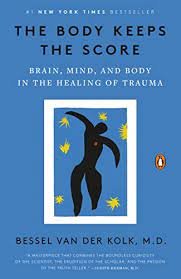
A good colleague and best friend suggested I read The Body Keeps the Score by Bessel van der Kolk, MD, published by Penguin Publishing Group in 2014 and updated in 2022. Kolk writes that regardless of the type of abuse: sexual, violent, loss of job, loss of loved one or illness, trauma affects all of us.
We have all experienced trauma, having survived the COVID-19 pandemic. Many of us contraced COVID-19. Some, like me, had it twice. Many of us lost dear friends, family and colleagues, not to mention the fear of the unknown and sheltering in place. We will never fully understand the residual trauma imposed by the COVID-19 pandemic until we have had enough distance to look back on it with any objectivity.
“In The Body Keeps the Score, Kolk uses recent scientific advances to show how trauma literally reshapes both body and brain, compromising sufferers’ capacities for pleasure, engagement, self-control, and trust. He explores innovative treatments—from neurofeedback and meditation to sports, drama, and yoga—that offer new paths to recovery by activating the brain’s natural neuroplasticity. Based on Dr. van der Kolk’s own research and that of other leading specialists, The Body Keeps the Score exposes the tremendous power of our relationships both to hurt and to heal—and offers new hope for reclaiming lives.”
Most importantly, Kolk explores the positive impact of creative outlets like dancing and writing and mindfulness practices like meditation and yoga, which can facilitate brain remodeling to stop the pain.
Early on in my healing journey, I sought the help of a therapist who encouraged me to paint as a way to heal. Later, I found writing as an outlet, and I haven’t stopped since.